

Wine Pairing for a Seasonal Tasting Menu in Antwerp
Nov 17, 2026 · 5 min read · Harvest – Antwerp
Why seasonal dishes change what you drink, course by course How we choose local and low-intervention pairings at Harvest Simple tips for ordering wine with a tasting menu in Antwerp
Wine pairing has a reputation for being complicated – a language spoken by sommeliers while the rest of us nod politely. It isn’t. Pairing is simply the art of matching a drink to a dish so that both taste a little more like themselves. When the food is seasonal and the menu changes with the fields, pairing becomes something warmer than a rulebook: a way of following a moment in the year, course by course.
At Harvest, we cook a seasonal tasting menu in the heart of Antwerp, built on organic, responsibly sourced local produce. Guests often ask us how the wine is chosen, and whether they should trust the pairing or order for themselves. This guide is our answer – a beginner’s walk through how pairing works, how we choose at the table, and how to order wine with a tasting menu in Antwerp without overthinking it.
Why Seasonal Dishes Change What You Drink
A winter root vegetable and a spring pea don’t ask for the same glass. Seasonality changes a dish’s weight, sweetness, acidity and texture, and each of those pulls the wine in a different direction. A slow-braised autumn dish is dense and earthy; a June plate of fresh greens is light, green and bright. Pairing is really about balance – matching intensity to intensity, and letting acidity or sweetness do the tidying up.
The rule that isn’t a rule
The old advice – white with fish, red with meat – is a starting point, not a law. What matters more is how a dish is cooked and dressed. A buttery, oaked sauce pushes a dish toward a richer white or a lighter red, whatever the protein. A sharp citrus dressing wants something crisp and mineral to meet it. Once you think in terms of weight and seasoning rather than colour, pairing stops being a test and becomes a conversation.
Acidity, fat and sweetness
Three ideas cover most of beginner pairing. Acidity cuts through richness – think citrus, tomato or vinegar on the plate, and a bright, high-acid wine alongside. Fat softens tannin and needs freshness to lift it, which is why a creamy dish loves a white with a spine of acidity. Sweetness in a dish makes dry wine taste thin, so a touch of sweetness in the glass keeps everything in proportion. Keep those three in mind and you already pair better than most.
How We Choose Pairings at Harvest
Our starting point is always the plate in front of us and the season we’re cooking in. Before we think about labels or regions, we taste the dish and ask what it needs: lift, warmth, freshness, or a little sweetness. Only then do we look for a wine that answers that question rather than one that simply sounds impressive.
Local first, low-intervention where it counts
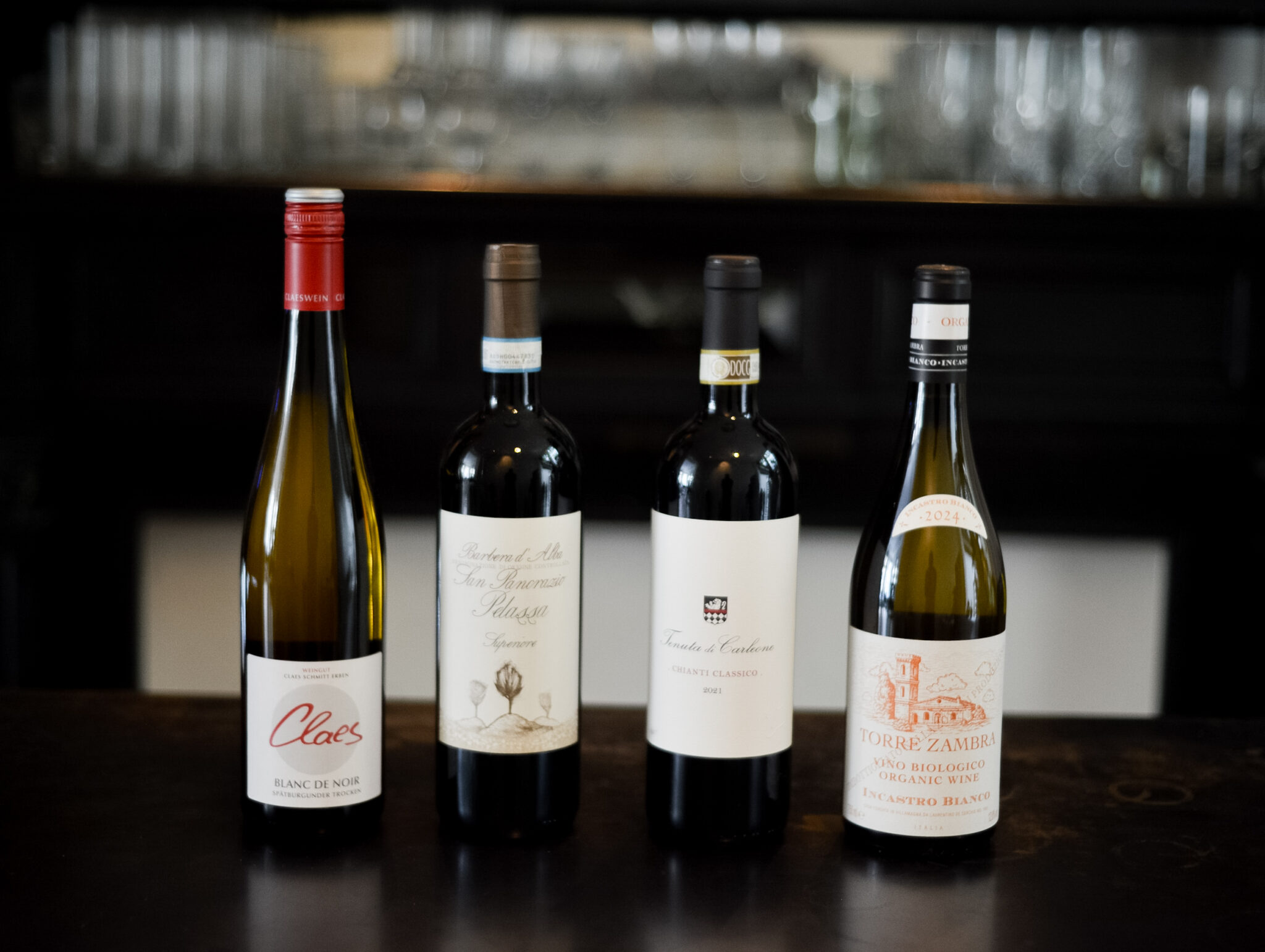
Because our kitchen is built on organic, responsibly sourced produce, we look for the same values in the glass. Where we can, we pour Belgian and nearby European producers – small growers working with low-intervention methods, native varieties and honest farming. That isn’t dogma; it’s a preference for wines that taste of a place, the same way our vegetables do. A low-intervention wine often has a liveliness and a slight wildness that mirrors a seasonal menu much better than a polished, predictable bottle.
At the table, our team will happily walk you through why each glass is there and what it’s doing for the course. There are no wrong questions. If you’d rather drink something different, say so – the menu is always a starting point, and the best pairing is the one you actually enjoy.
Simple Tips for Ordering Wine with a Tasting Menu in Antwerp
If you’re deciding for yourself, a few habits make it easy. Ask what’s in season before you choose – seasonal cooking rewards seasonal drinking, and the staff know what’s just come in. Trust one glass at a time instead of committing to a whole bottle upfront; a tasting menu moves through many flavours, and flexibility serves you better than volume.
Consider a mixed approach: a paired glass for the courses you’re curious about, and a bottle you love for the rest. That balance keeps the evening relaxed and your budget in view. And if you’re sharing the table with someone drinking differently, ask for pairings by the glass – it’s a small request that restaurants are glad to meet.
Above all, notice what you taste. Pairing is a skill you build by paying attention, not by memorising lists. When a glass makes a dish suddenly make sense, remember it. That moment is the whole point.
A Gentle Way to Begin
Wine pairing doesn’t require expertise – just curiosity and a willingness to follow the season. The dishes change, the wines change, and the pleasure is in the match between them. Whether you let us choose for you or order course by course yourself, the goal is the same: a meal where every glass has a reason to be there.
We’d love to pour the next one for you. Join us at Harvest in Antwerp for our seasonal tasting menu, and let the pairing tell its own story – one course, one glass at a time.